Sustainably grown, locally picked.
Healthy lunches made affordable.
Fresh organic healthy ready meals and meal kits are usually expensive. They also are not widely available in Nova Gorica. Many people cannot easily find this type of food every day, and when they do, the price is often too high.
We create a small but fully functional local company that controls the whole chain. We grow the plants, prepare the food, and deliver fresh organic healthy meals directly to the customer. This keeps the business efficient, local, and affordable. Customers can buy through our own shop or restaurant, and get fast, healthy food made from local ingredients.
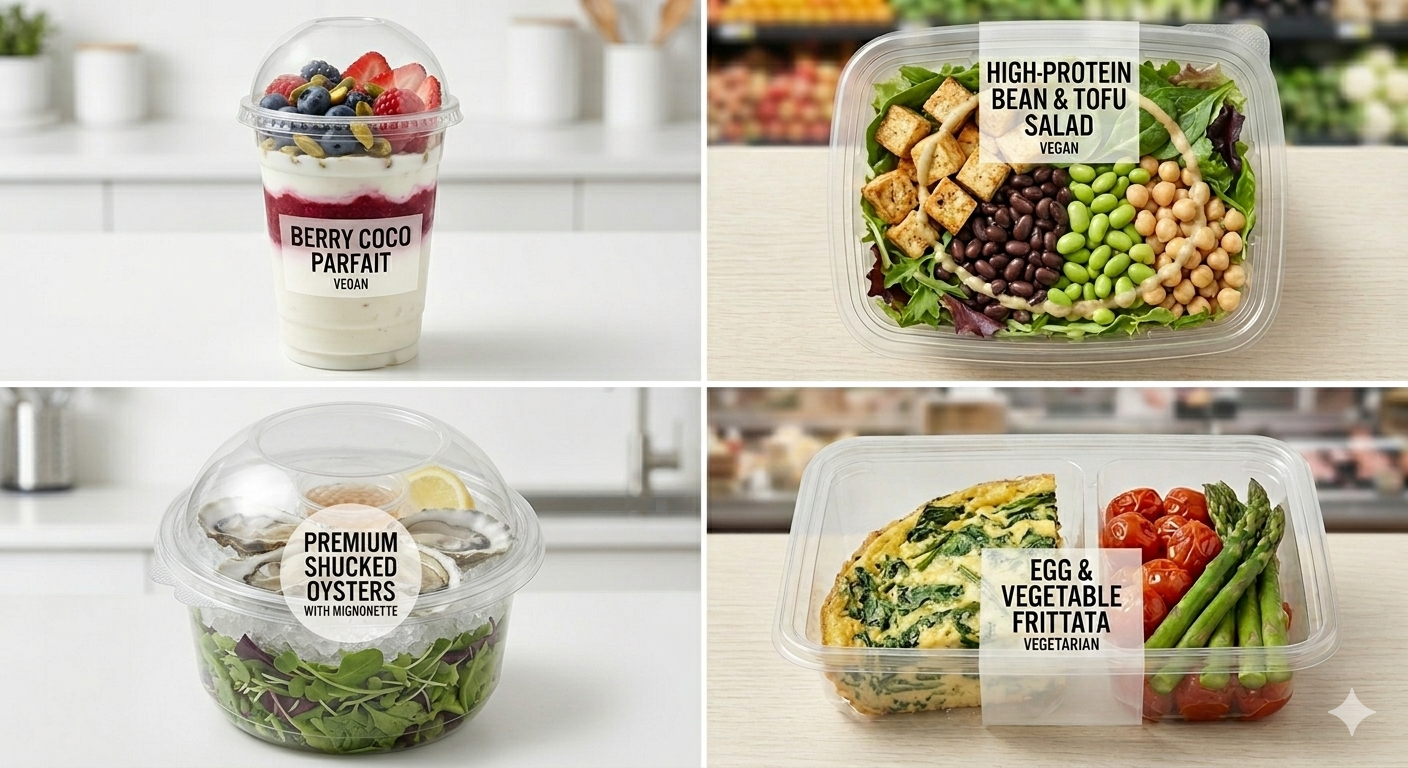
Four proven Western & Nordic recipe adaptations designed for self-sufficient production and zero supply-chain risk.
Minimal processing, raw-heavy, 100% self-produced inventory.
The MVP eliminates supply chain risk by using a 100% self-sufficient production model. All plant ingredients are grown in our solar-energy-supported agroforestry gardens. Seafood elements are sourced from our internal small-scale aquacultures, and eggs are provided by our own flock of free-range chickens.
For strict ecological and ethical reasons, meat and dairy are entirely excluded from the initial launch to maintain a low carbon footprint.
If the business scales successfully, free-range dairy production will be evaluated as a future expansion phase.
Routing these transparently packaged, fresh options through our vertical network allows us to test market viability in Nova Gorica immediately at an accessible price point.
This direct supply chain cuts out traditional markups, ensuring we pass 100% of the cost savings directly to the consumers.
Building a private farm and fish system on day one costs too much money. To save cash, our pilot phase will buy fresh vegetables from existing local farmers in the Vipava Valley. We will spend our initial budget only on renting a kitchen and setting up 2 or 3 unpowered, wool-insulated pickup boxes. This lets us test if the delivery system actually works before spending big money on building agricultural infrastructure.
Instead of annoying customers with long feedback forms, our app will simply track what they do. We will monitor how fast each dish sells out and how long a meal sits in the locker before it is picked up. Watching actual buying habits gives us much more accurate data to adjust our portion sizes and recipes than asking people to fill out surveys.
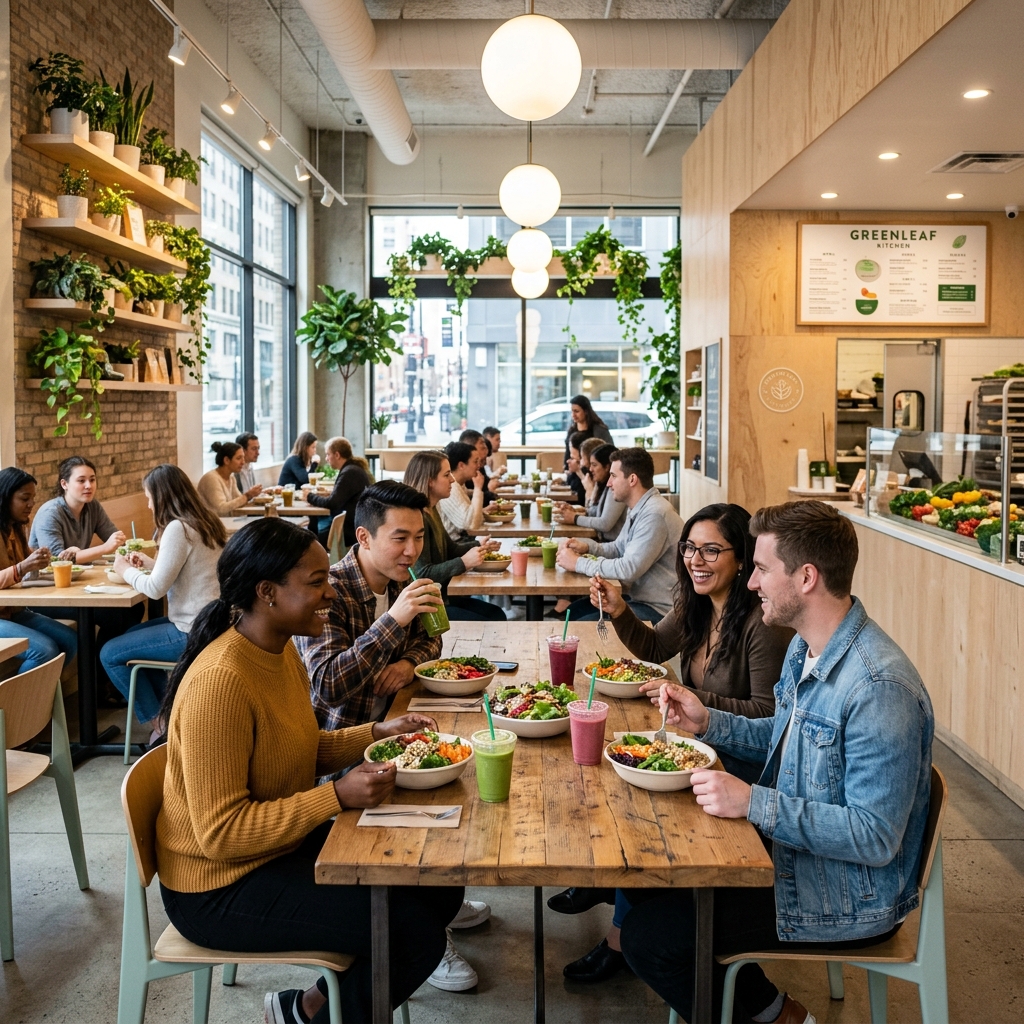
Our model is built to be highly affordable for both busy workers and students. We cater to a diverse community of health-conscious individuals aged 18–45—including flexitarians and organic food enthusiasts—who need fast, healthy fuel for their busy days. By placing our first pickup boxes right outside universities, major offices, and cross-border transit points, we directly reach students, local professionals, and Gorizia residents who want premium, local organic produce for under €9.
Normal restaurants waste up to 10% of their food because their menus are too large. We are keeping things simple by offering only the four specific dishes shown in our catalog. Because these dishes share the same ingredients—like using the same fresh greens for the salad, the frittata, and the oysters—the kitchen is incredibly easy to run, and we keep food waste at zero.
A food business only survives if customers come back. We will measure our success by how many people become regulars. If 30% of the people who try our meals keep ordering them every week for a month, we have proven the business works. Once we hit that goal, we can safely invest in building our own solar-powered agroforestry gardens and aquaculture systems.
The Innovation
We are reimagining the food journey by controlling every step of the process. From the first seed to the final meal, we ensure excellence.
Performing regular research to track market updates, analyze changing consumer demands, and integrate the most recent user feedback.
Cultivating high-yield plants, free-range poultry, and clean aquacultures organically.
Transforming raw garden yields into nutrient-preserved, chef-crafted ready meals.
Direct placement through our own transparent channels without any expensive middlemen.
We cater to a diverse community of health-conscious individuals who value quality, sustainability, and time.
Ages 18-45, looking for fast but healthy fuel for their busy days.
Flexitarians and organic food enthusiasts who care about what they eat.
Gorizia residents seeking premium local organic produce.
Building a fully closed-loop, eco-friendly infrastructure by combining natural cycles with smart green engineering.
Organic waste from our restaurants and prep hubs is composted and returned to the agroforestry soil. This reduces waste and improves natural soil fertility.
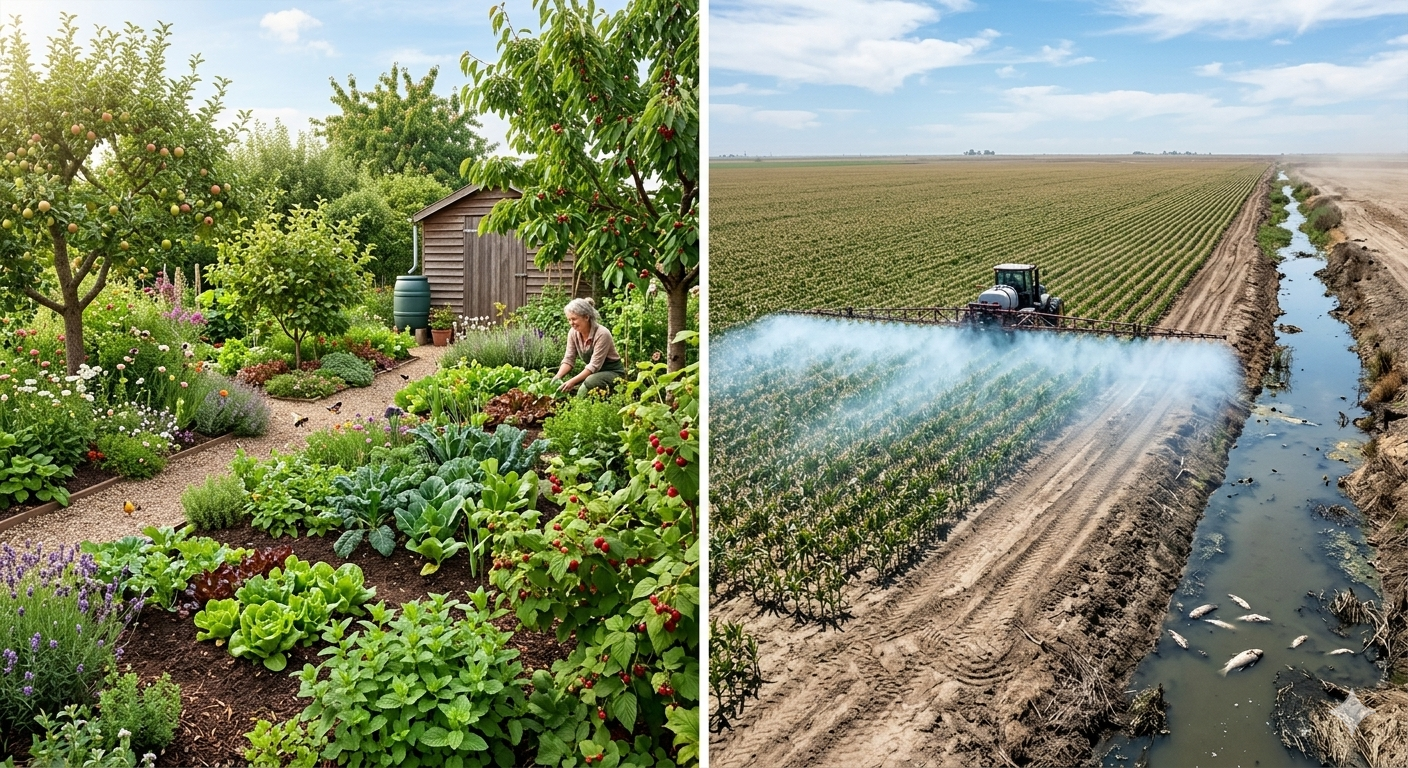
Agroforestry is a natural growing system where trees, herbs, vegetables, and other plants grow together. Different plants support each other, improve soil quality, reduce erosion, and create healthier ecosystems with less need for chemicals.
Solar panels help power refrigeration, lighting, water pumps, and kitchen operations. This reduces electricity costs and dependence on external energy sources.
Rainwater is collected and reused for irrigation, reducing water costs and lowering dependence on external water systems.
Different crops are grown in different seasons to protect soil quality, reduce pests naturally, and maintain long-term productivity.
Leaves, grass, and organic plant material are used to protect soil moisture, reduce weeds, and improve soil health naturally.
Whenever possible, reclaimed wood, reused containers, recycled materials, and repurposed infrastructure are integrated into gardens, furniture, storage, and operational systems to reduce waste and construction costs.
Low-energy refrigeration, efficient kitchen appliances, LED lighting, and optimized cooking systems help reduce electricity consumption.
Food is grown, prepared, and delivered locally. This reduces transport costs, packaging waste, and storage needs.
A natural, diverse way of growing food that replaces industrial monocultures with a resilient, self-sustaining loop.
As a small to medium local supplier, we can afford to work differently. Agroforestry allows plants to grow in more natural conditions with less chemical intervention and less over-management. This creates healthier soil, more resilient crops, and fresher organic food for local customers.
Agroforestry is a way of growing food where many different plants grow together, similar to how nature works in a forest. Trees, vegetables, herbs, flowers, and other plants support each other naturally.
Monocultures became dominant because they are easier for large companies to manage, sell, transport, and standardize. Growing one crop over huge areas makes industrial farming simpler and more predictable for global markets. This system was built for scale and profit, not because it is better for people or nature.
Monocultures weaken soil over time and often need pesticides, chemical fertilizers, and more water. They reduce biodiversity and create fragile systems where one disease or climate problem can damage entire harvests. Food quality and ecosystem health also suffer.
Modern economies reward systems that produce large volumes of standardized products quickly. Small diverse farms survive with more difficulty because industrial systems, distribution networks, and supermarkets are designed around monoculture production.
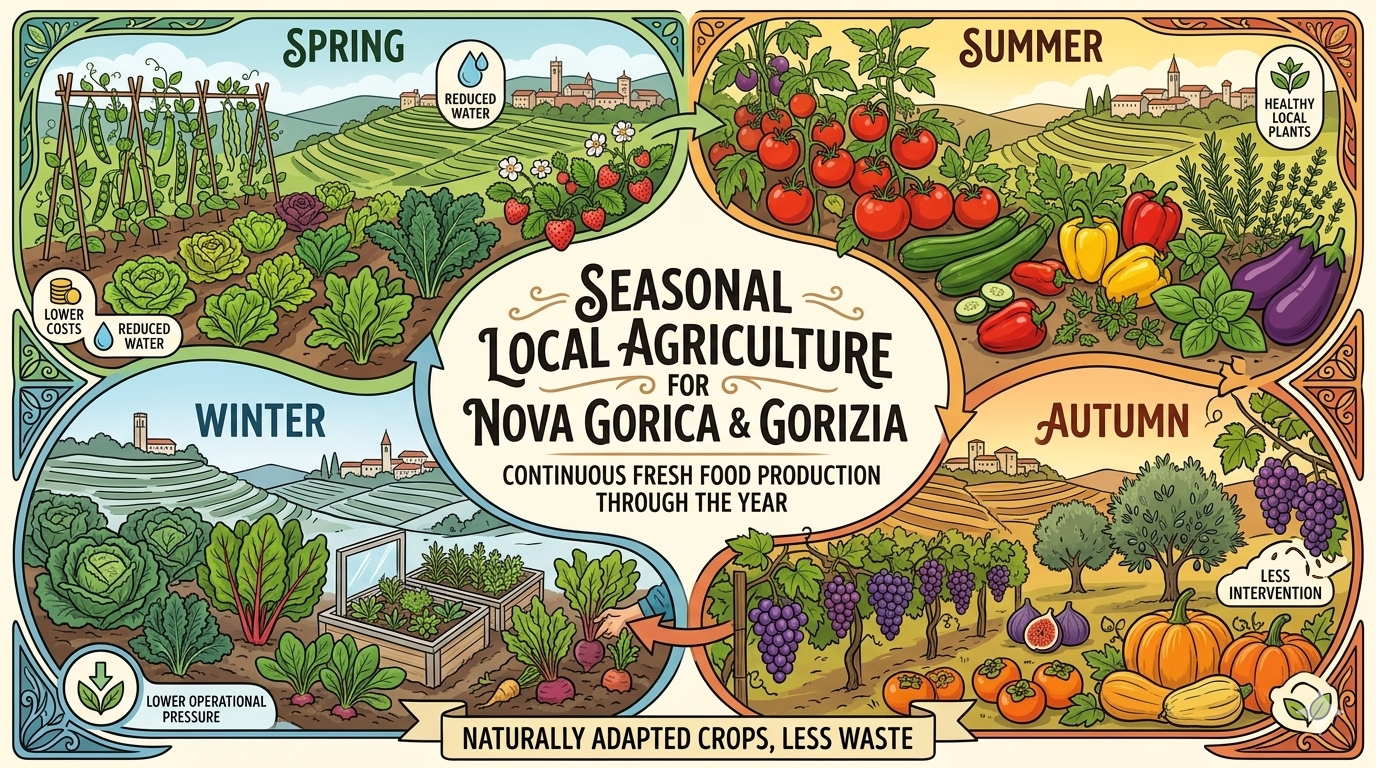
Choosing native and seasonal crops that naturally thrive in the Mediterranean climate of Nova Gorica and Gorizia.
We focus on plants that naturally grow well in the Nova Gorica and Gorizia climate. The mild weather, long growing season, and Mediterranean influence allow many crops to grow with less intervention and lower costs.
By choosing plants that naturally adapt well to the local climate, we reduce water use, reduce plant stress, and lower maintenance costs. Healthy local plants require fewer chemicals and less artificial support.
Growing crops from different seasons helps reduce costs and stabilize production throughout the year. Spring, summer, autumn, and winter crops naturally replace each other, allowing continuous fresh food production with lower waste and lower operational pressure.
To complement our crop cycles, we integrate free-range eggs and modern circular aquacultures, providing clean, fresh local proteins directly to the community.