The Dawn of FICS
Facial Interaction Control Systems (FICSs) represent a new generation of human-machine interfaces. They are fast, intuitive, and completely hands-free. This breakthrough project explores the design and development of a Vision-Activated Control System that interprets micro-expressions, eye movements, and facial gestures to control physical hardware in real time.
Relying heavily on modern Computer Vision, Convolutional Neural Networks (CNNs), and Human-Computer Interaction (HCI) principles, this prototype allows users to toggle devices using nothing but a smile, a blink, or a spoken phrase.
The Prototype in Action
Operating the system is seamless and interactive:
- Booting Up: The ESP8266 microcontroller powers on, connects to Wi-Fi, and displays its IP address on the integrated I2C LCD.
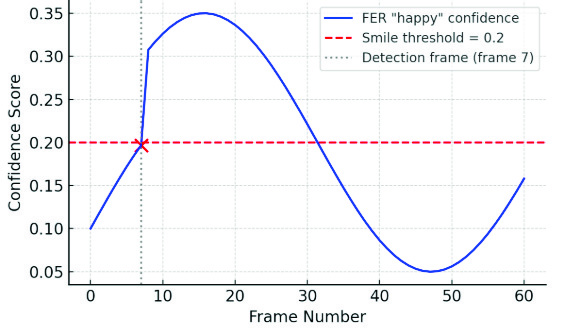
- Activation: The user smiles at the webcam. The system detects the expression, switches off the standby LED, and illuminates the "System Ready" indicator.
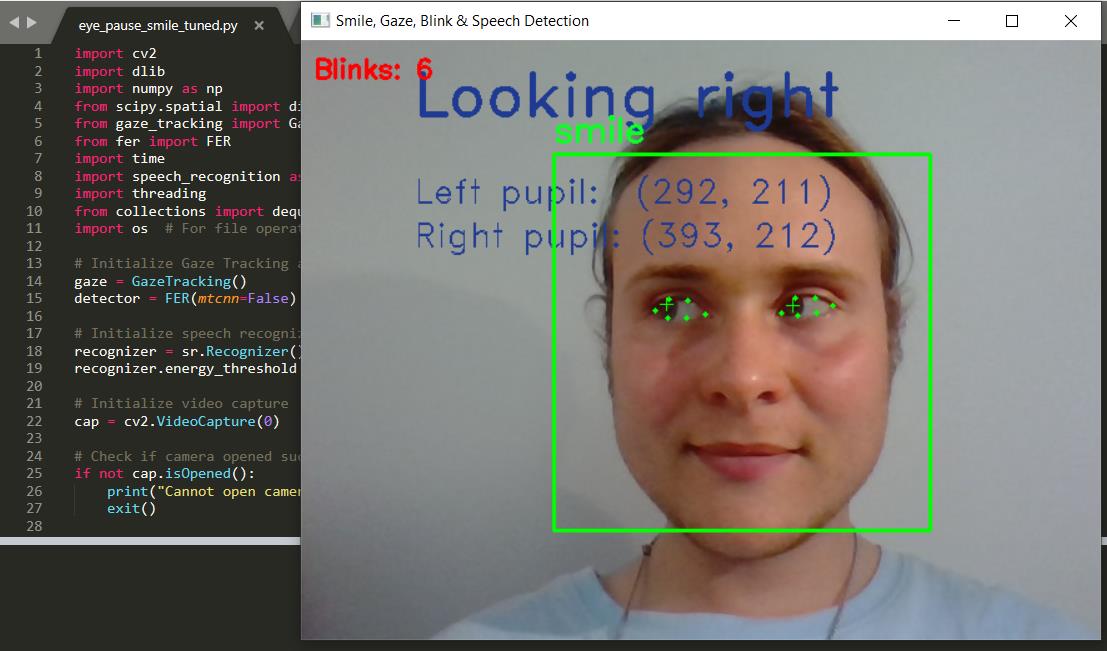
- Gaze Control: Looking left or right selectively controls physical LEDs (D5 and D6).
- Complex Gestures: A combination of a smile and three quick blinks toggles a 12V DC motor via an isolated relay (D4).
- Voice Overrides: Saying "Stop please" pauses all operations instantly, while "Go on please" resumes the workflow.
Split-Stack Architecture
The system is elegantly divided between high-performance computing and low-latency embedded processing:
- Python Vision Logic (PC): Leverages OpenCV, dlib, GazeTracking, and SpeechRecognition to extract facial signals and voice inputs in threaded processes.
- Signal Relay Module (PC): Continuously maps recognized events (like a blink or gaze) to URLs (e.g.,
/S,/SB) and fires HTTP GET requests over the local network. - ESP8266 Hardware Control (C++): Acts as an embedded web server running Arduino code, parsing incoming HTTP requests to manipulate GPIO pins and provide real-time LCD feedback.
- Component Tester Utility: A standalone web-interface sketch for the ESP8266 used during prototyping to manually validate all hardware endpoints.
Hardware Blueprint
At the physical level, the FICS prototype is an Internet-of-Things (IoT) powerhouse built on affordable, accessible hardware:
- ESP8266 NodeMCU 0.9 Microcontroller
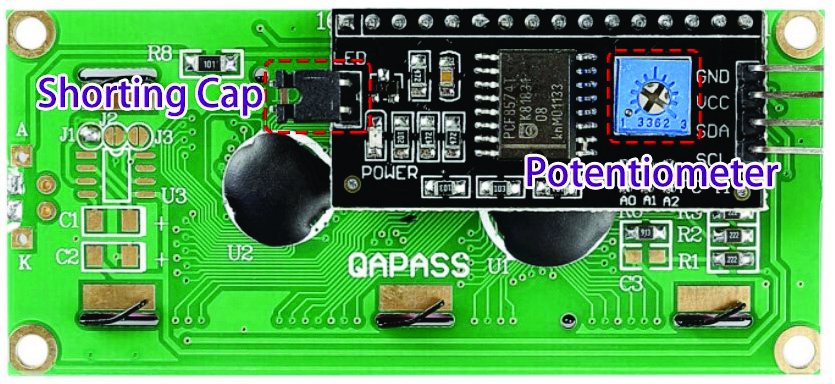
- I2C 16x2 LCD Display for Status
- DC Motor & Transistor Relay Module
- Multiple Colored LEDs (D0, D5, D6, D8)
- Webcam & External PC Processing
- Dedicated 5V & 12V Power Supplies
Visualizing the Data & Setup
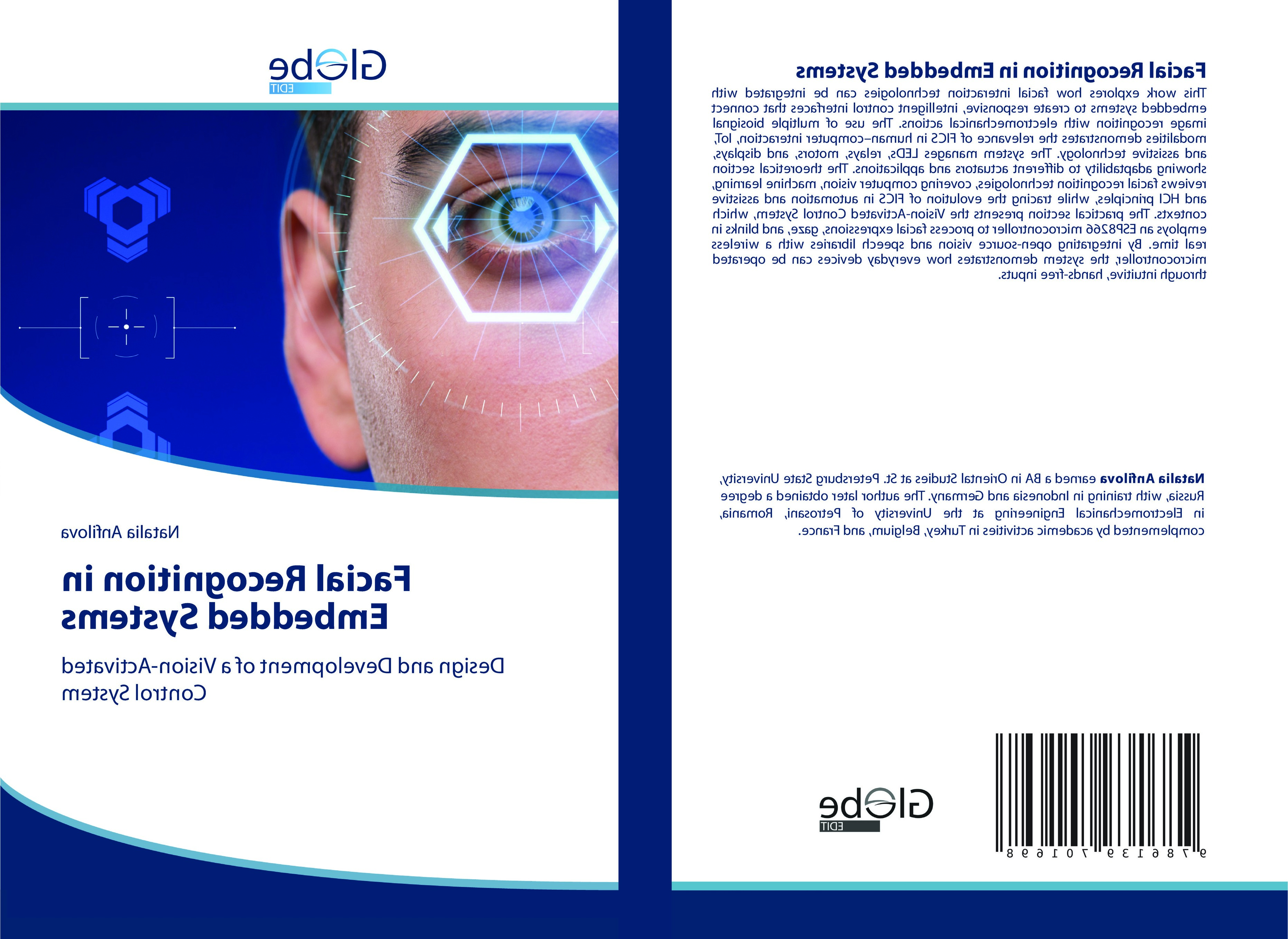
Published Edition Cover
Split-Stack Communication Flow
Physical Hardware Breadboard
Facial Landmark Extraction
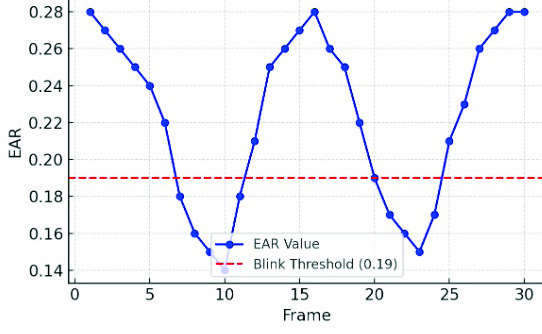
Gesture Processing Logic
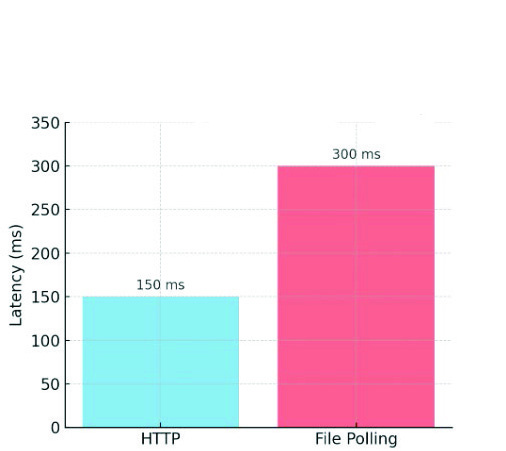
Hardware Interaction Testing
Future Trajectory & Industry Applications
The implications of this vision-driven controller extend far beyond a lab demo. As detailed in the ICIR2025 presentation, this adaptable architecture paves the way for:
By prioritizing accessibility, low latency, and robust cross-platform communication, this model serves as a foundational blueprint ready to evolve into countless critical real-life applications. This isn’t the future — it’s already here.